
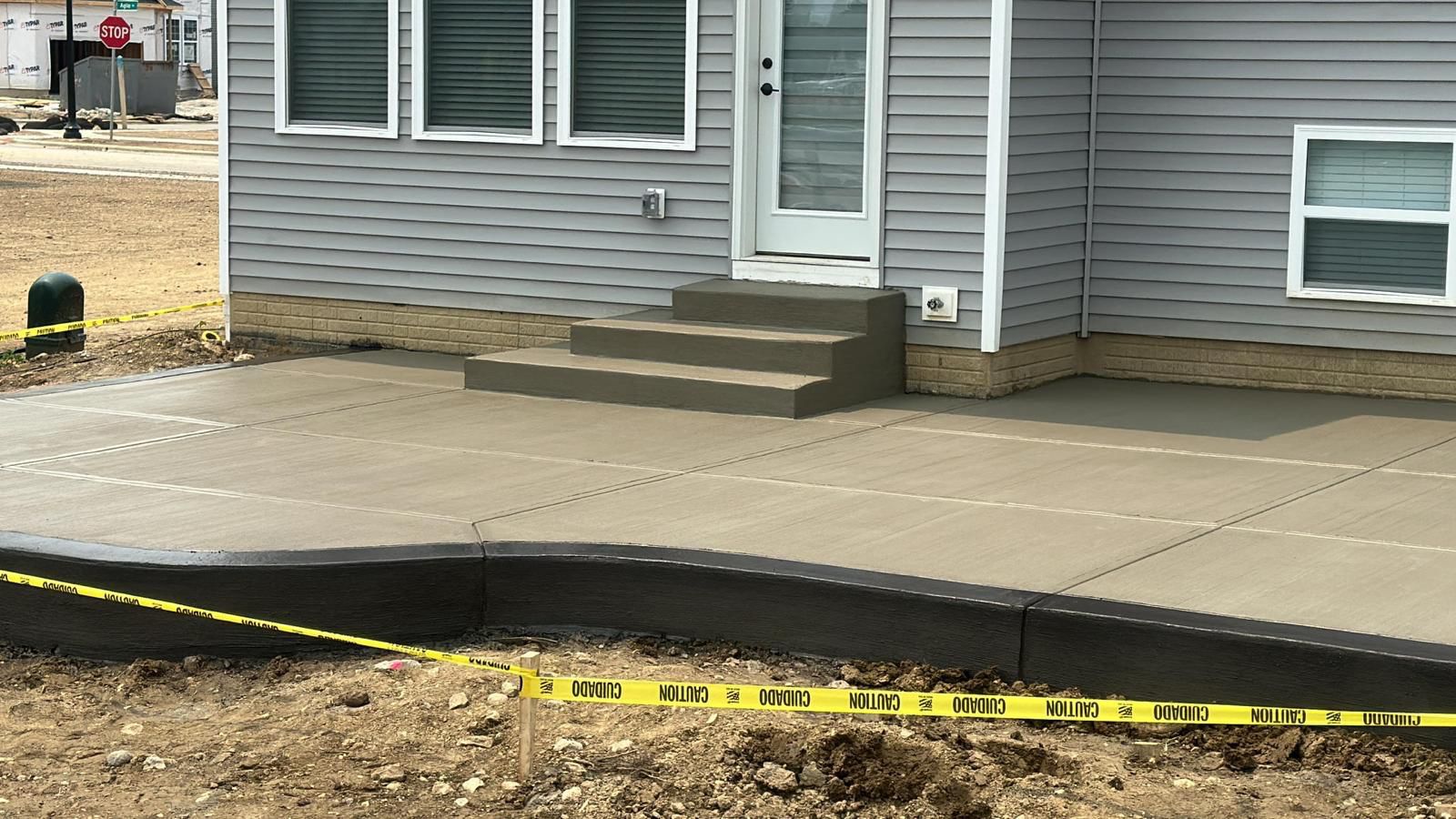
Decorative concrete that looks like slate, wood, stone, or brick — with the durability and lifespan of a poured concrete slab. Real photos from real projects below. Free, fixed estimates anywhere in the Columbus Metro.
Stamped concrete is poured as one continuous slab, then textured and colored to mimic natural materials like slate, flagstone, brick, or wood plank. Once it cures, you get a surface that looks premium but performs like concrete — no shifting pavers, no rotting wood, no weeds creeping up between joints.
For Columbus homeowners specifically, stamped concrete handles freeze-thaw cycles well when it's poured, jointed, and sealed correctly. That last part — correctly — is why crew matters. We use the right mix, the right sub-base, and the right joint spacing for Ohio's climate. Every project gets re-sealed guidance so it stays looking new for decades.
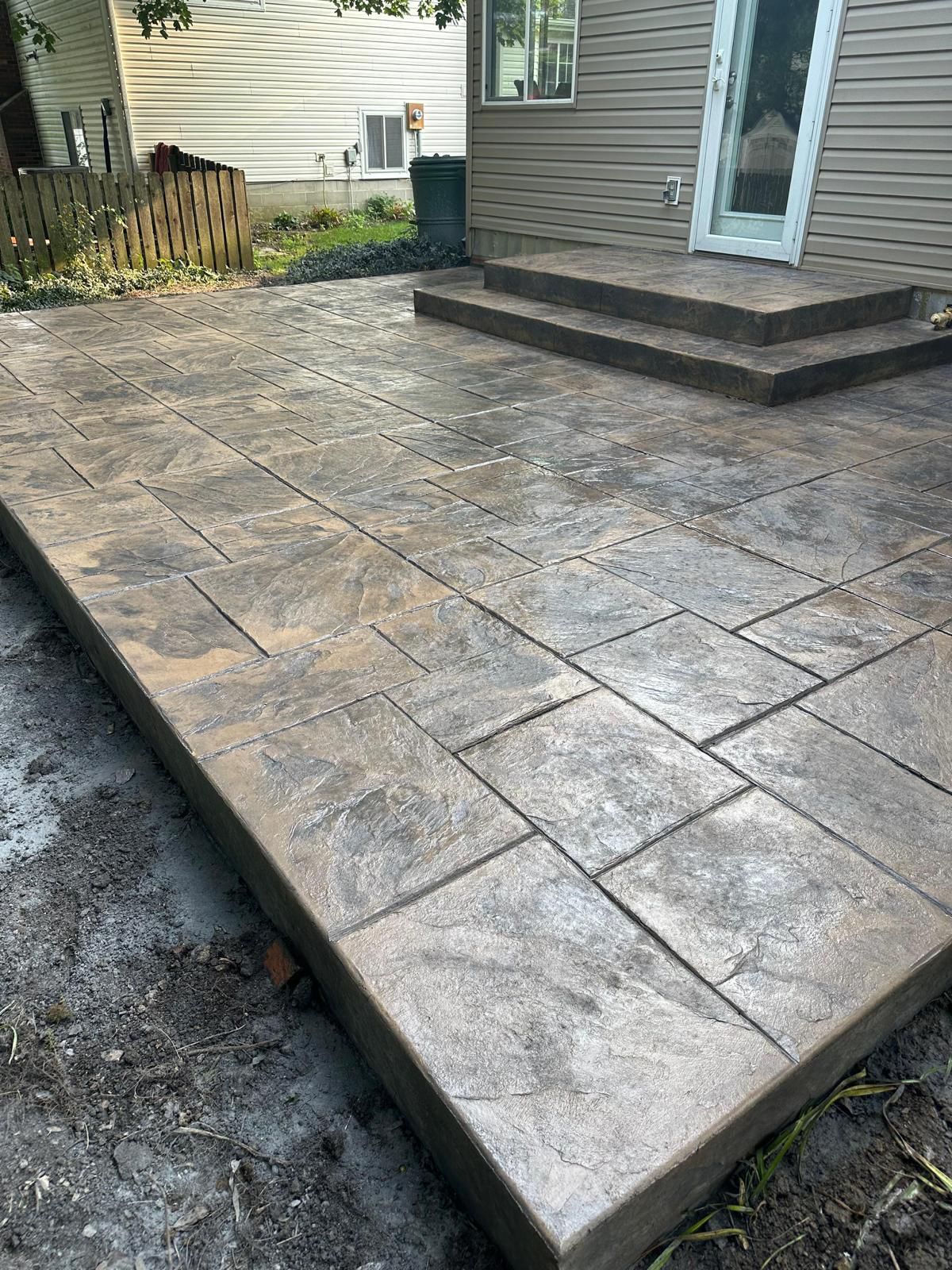
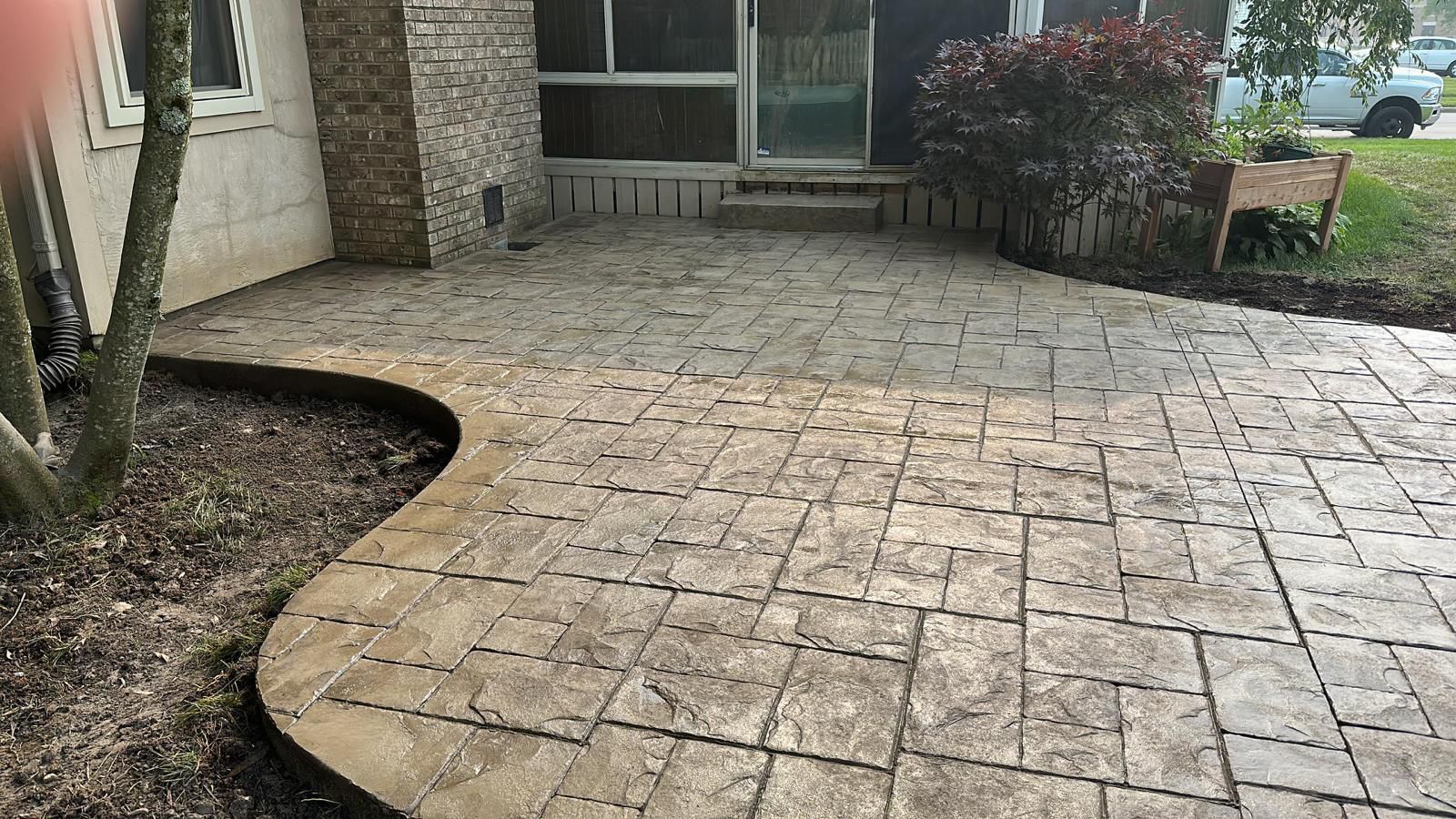
Rectangular grid pattern that mimics cut and stacked stone. The most versatile of our four patterns — works equally well for driveways, patios, sidewalks, and pool decks. Clean, modern, easy to match to traditional or contemporary homes.
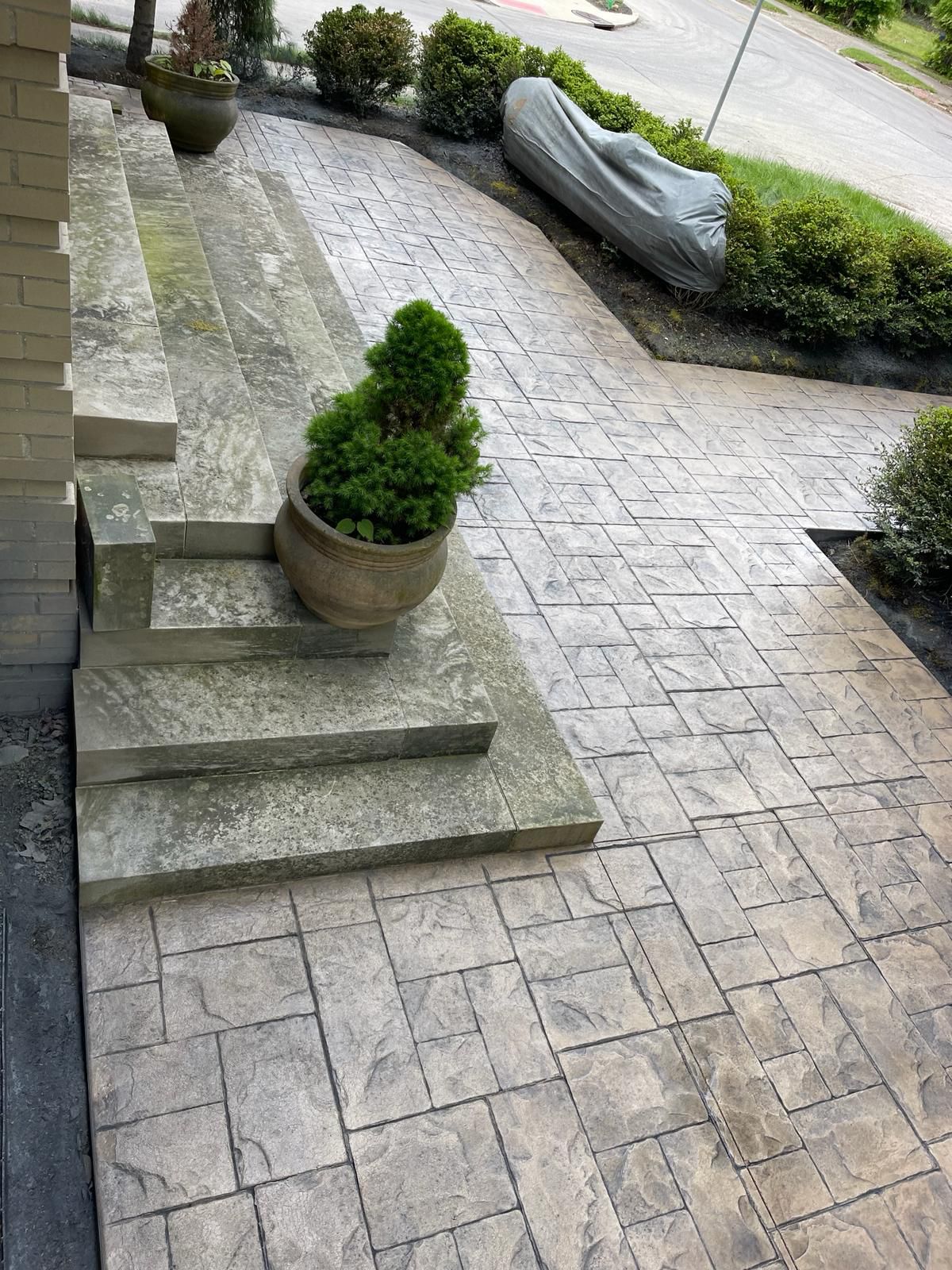
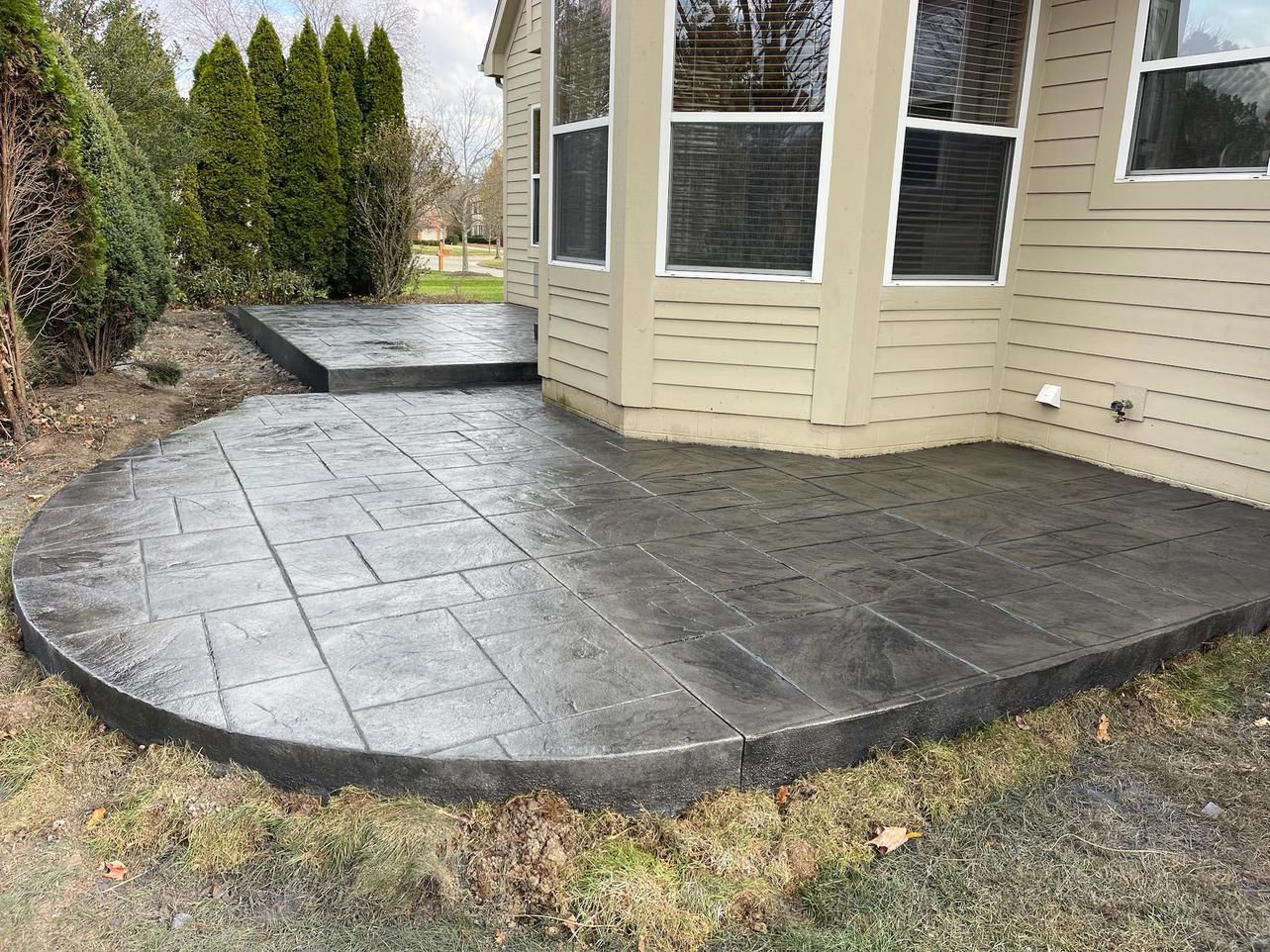
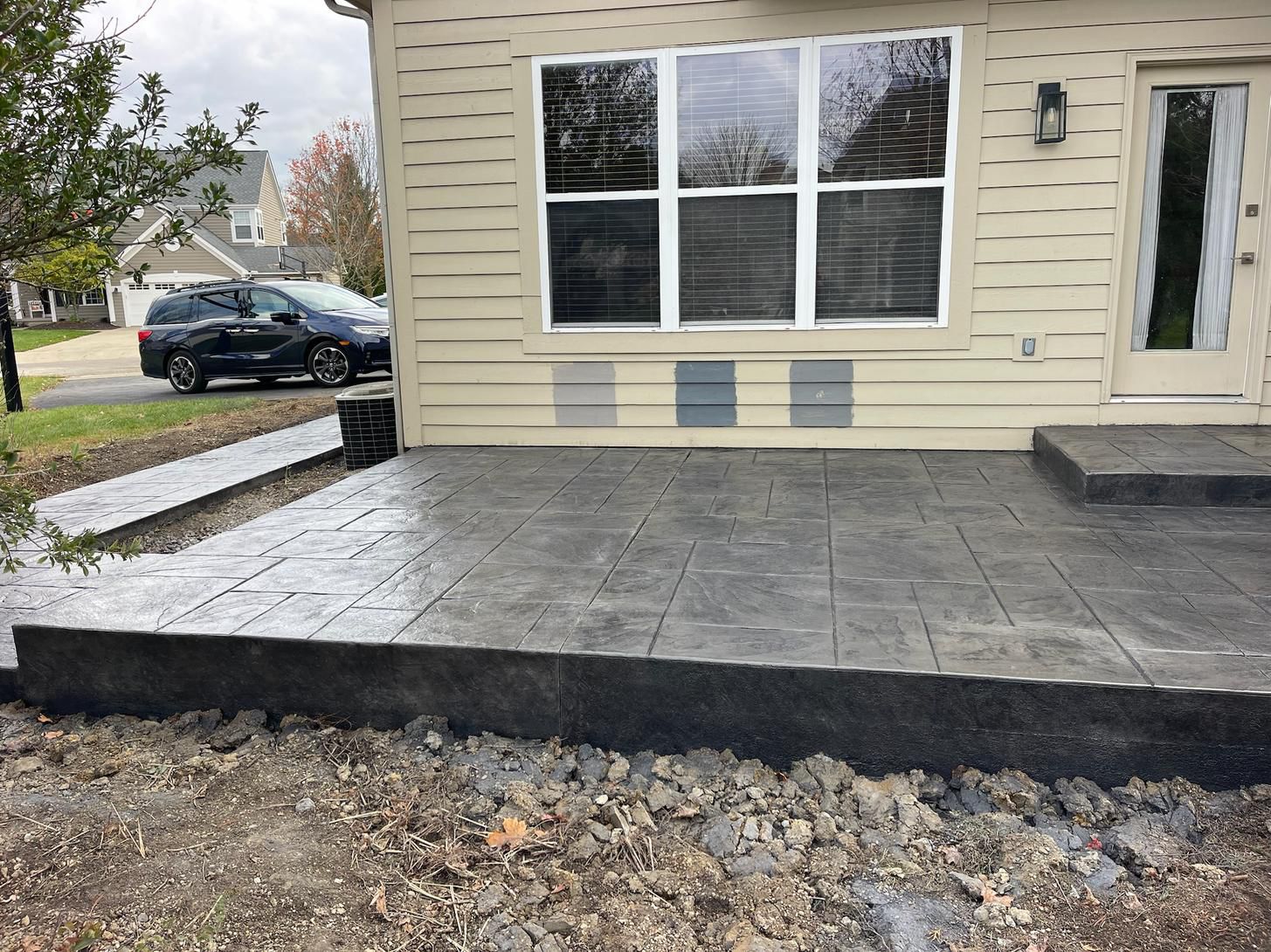
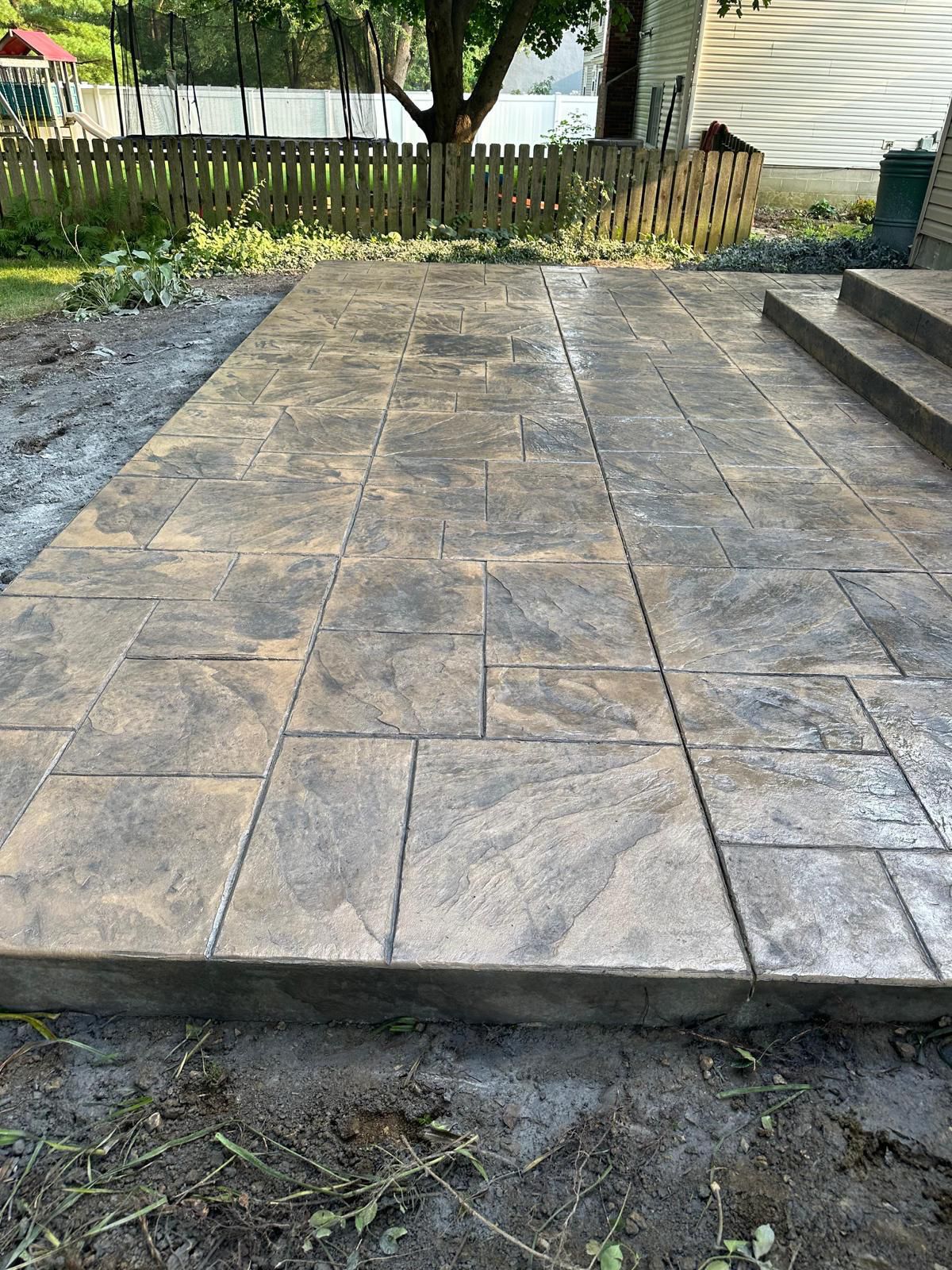
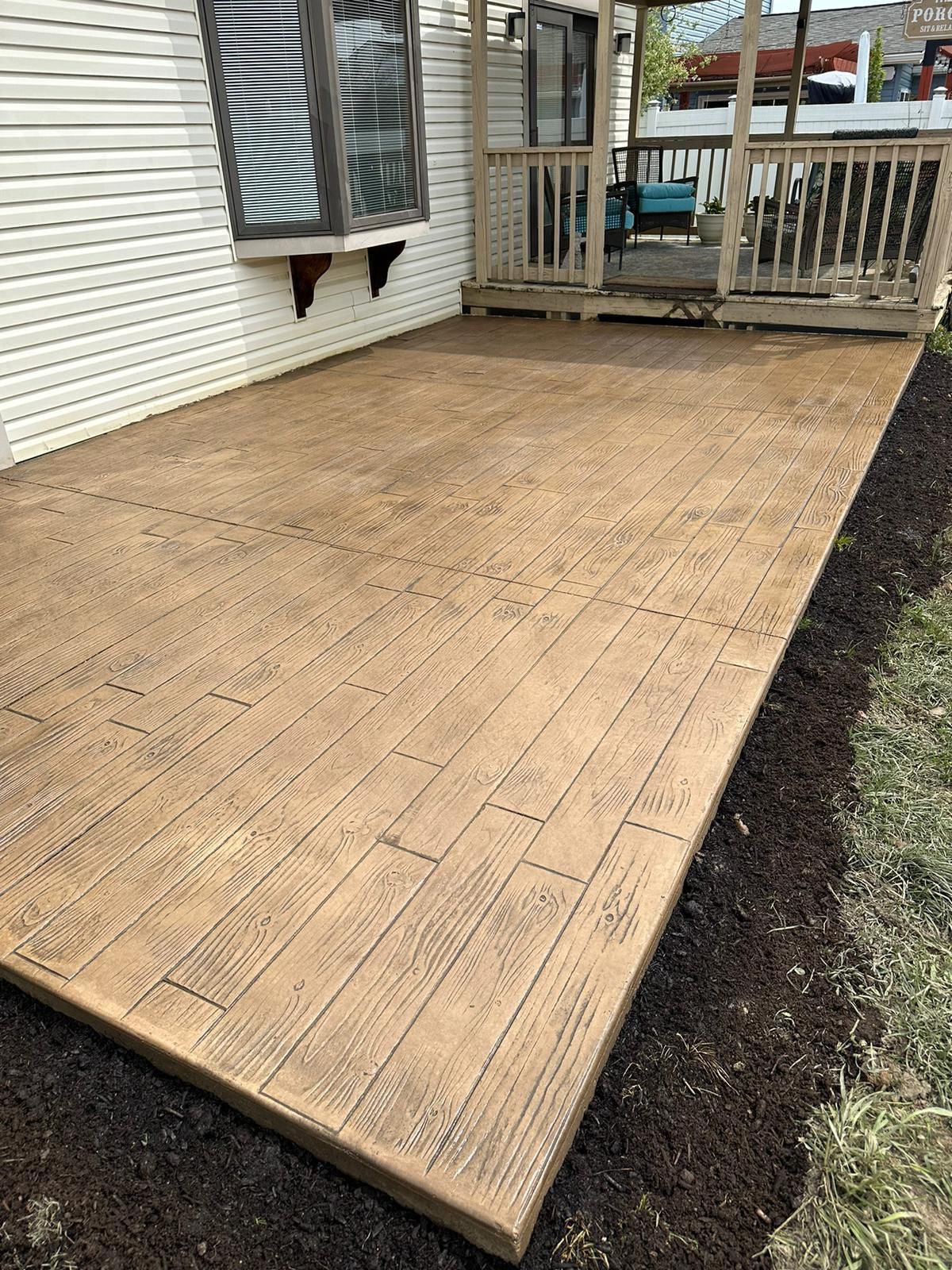
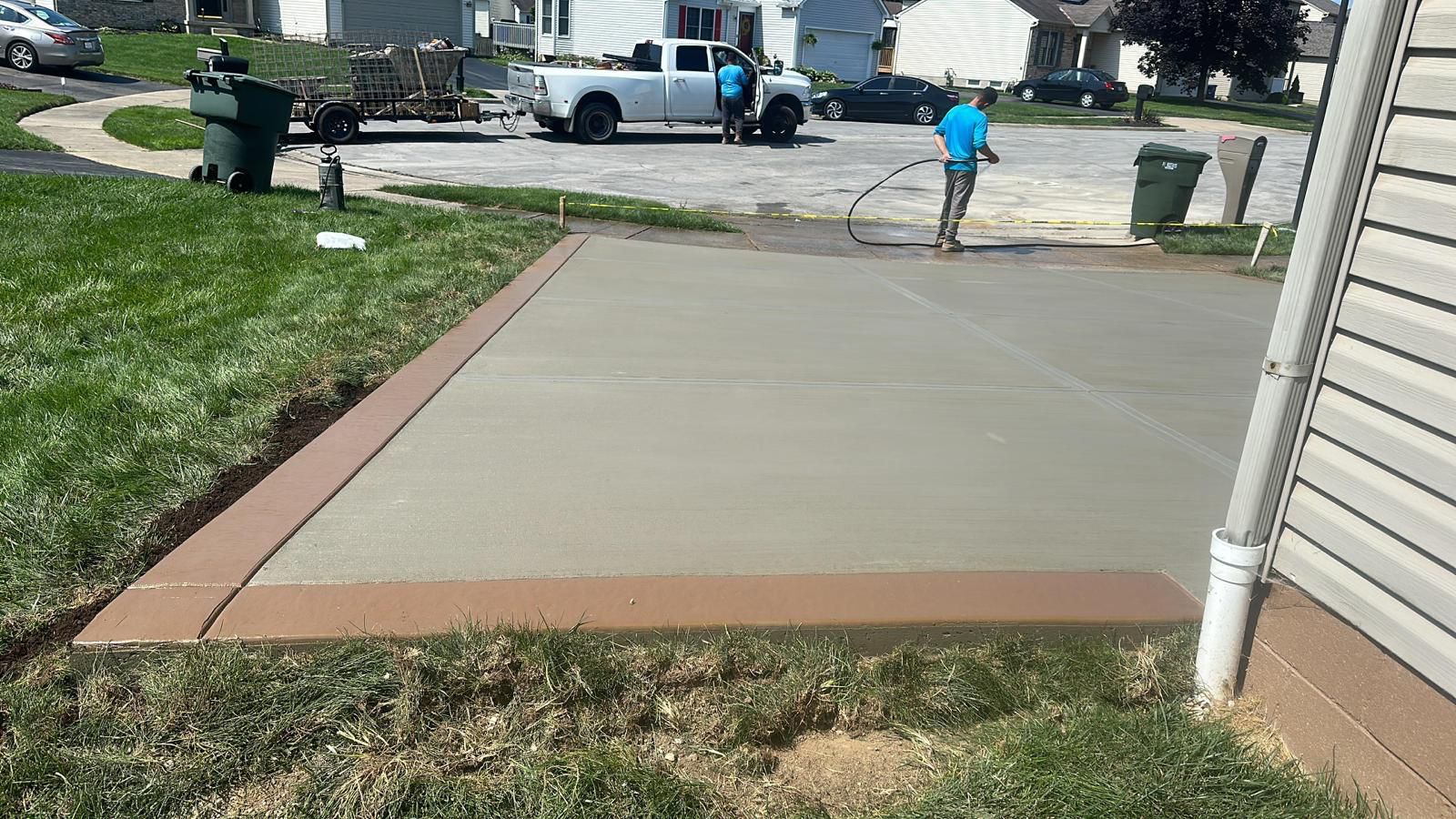
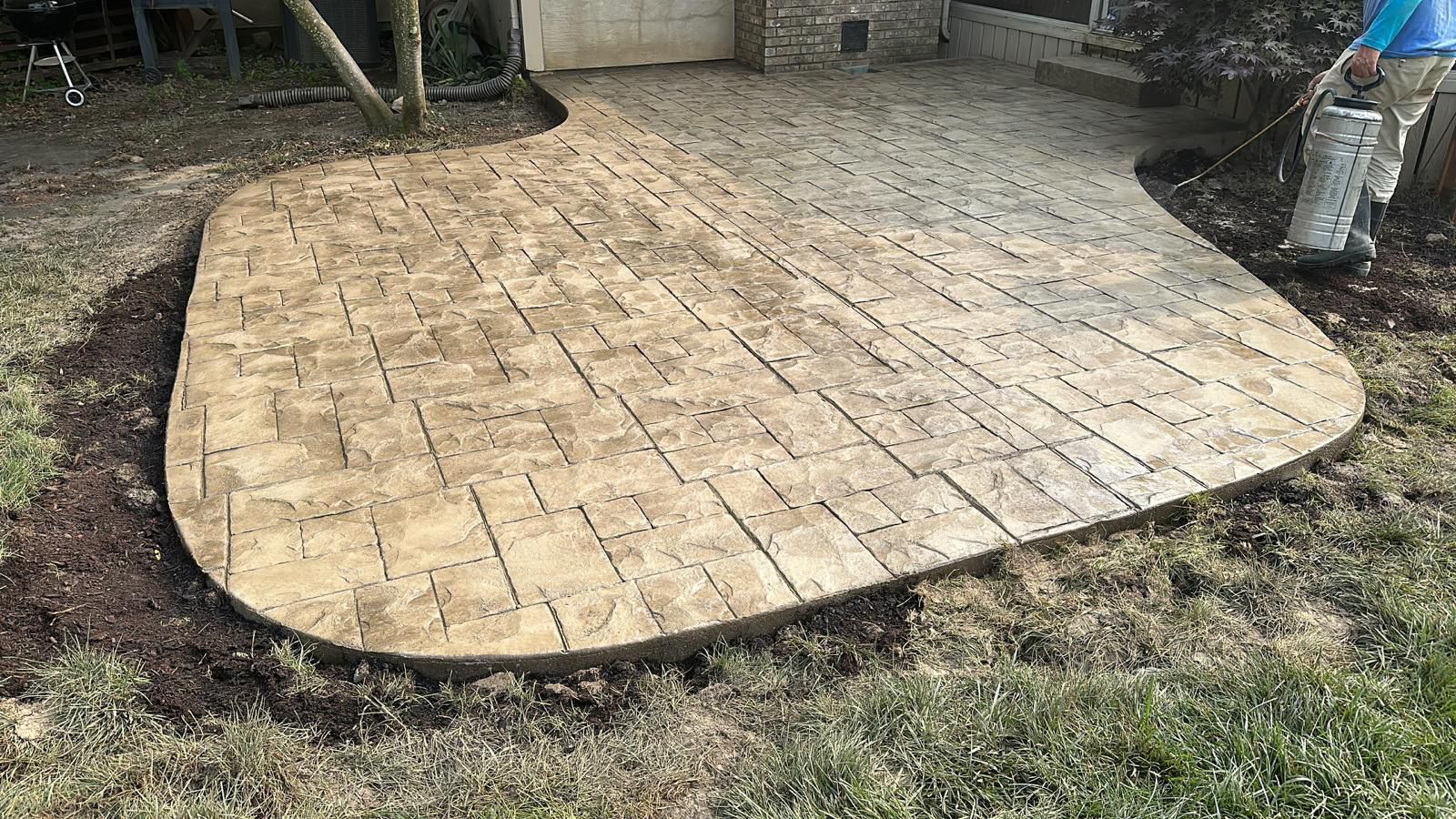
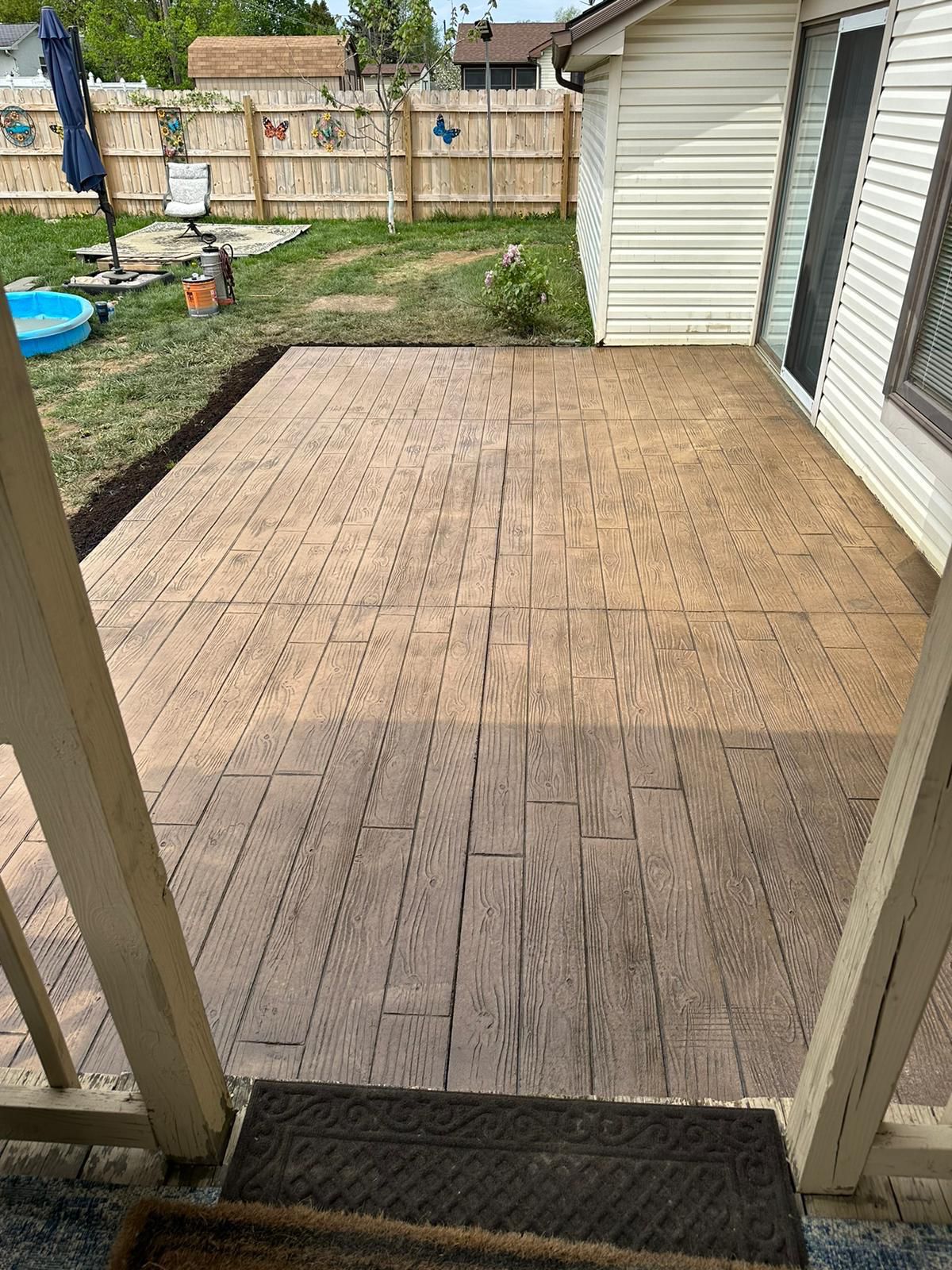
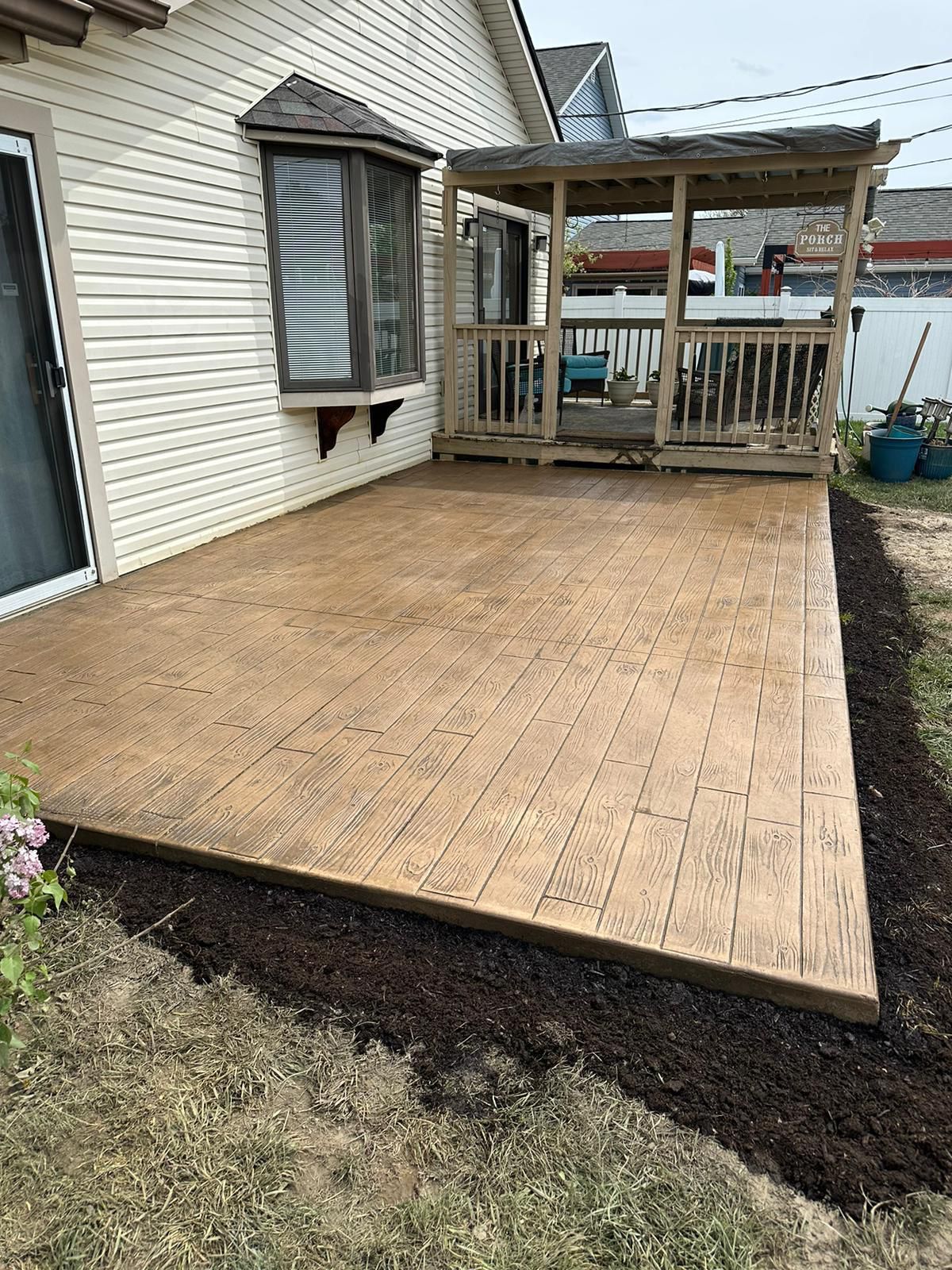
Looks like a wood deck, performs like concrete. Every plank line and grain texture is stamped into a single poured slab — so you get the warmth of wood without the rot, splinters, refinishing, or board replacements. Especially popular for back patios.
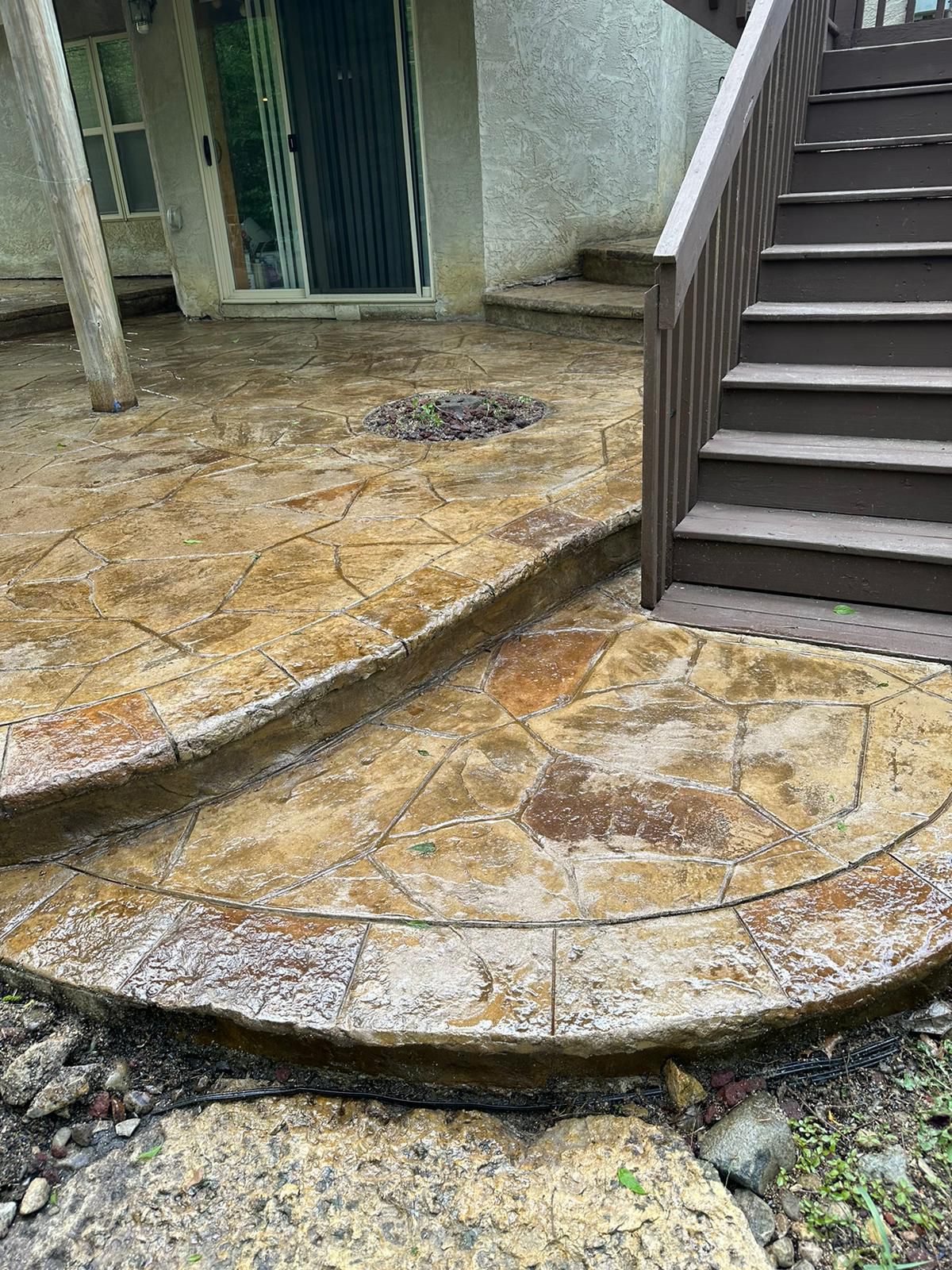
Organic stone shapes with curved seams instead of straight grids. Softer, more natural feel — the right choice when the patio or walkway has curves and you want it to look like it grew there. Available in dark charcoal, gray, or warm earth tones.
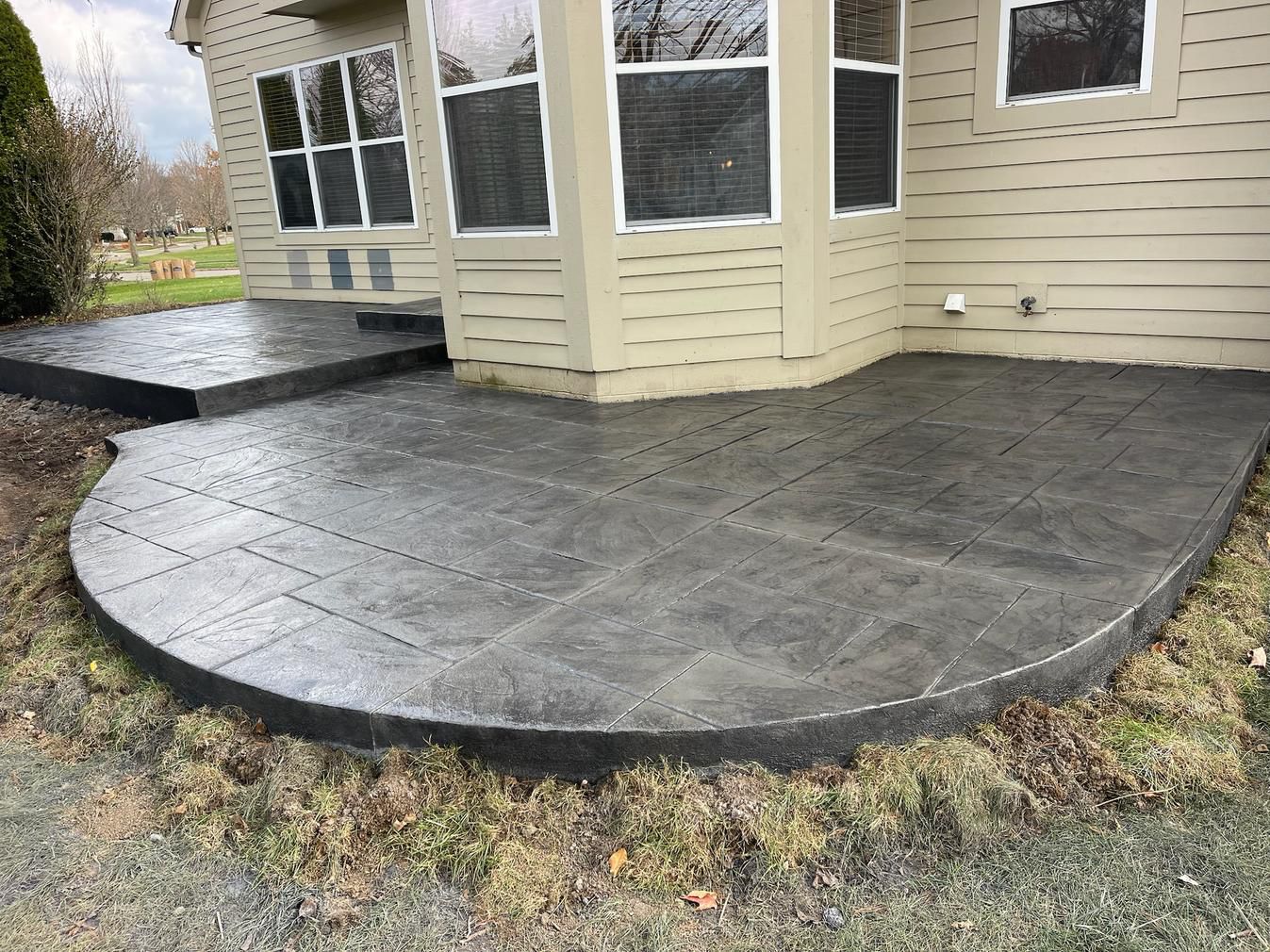
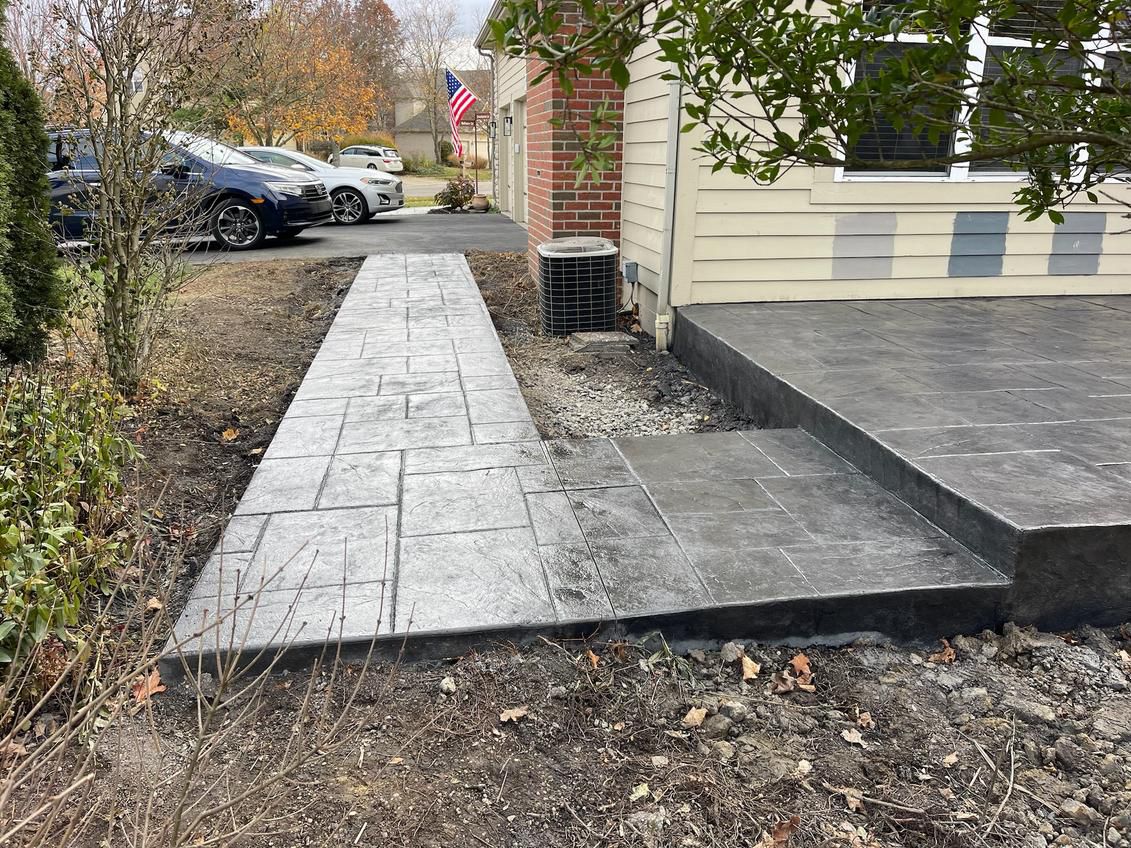
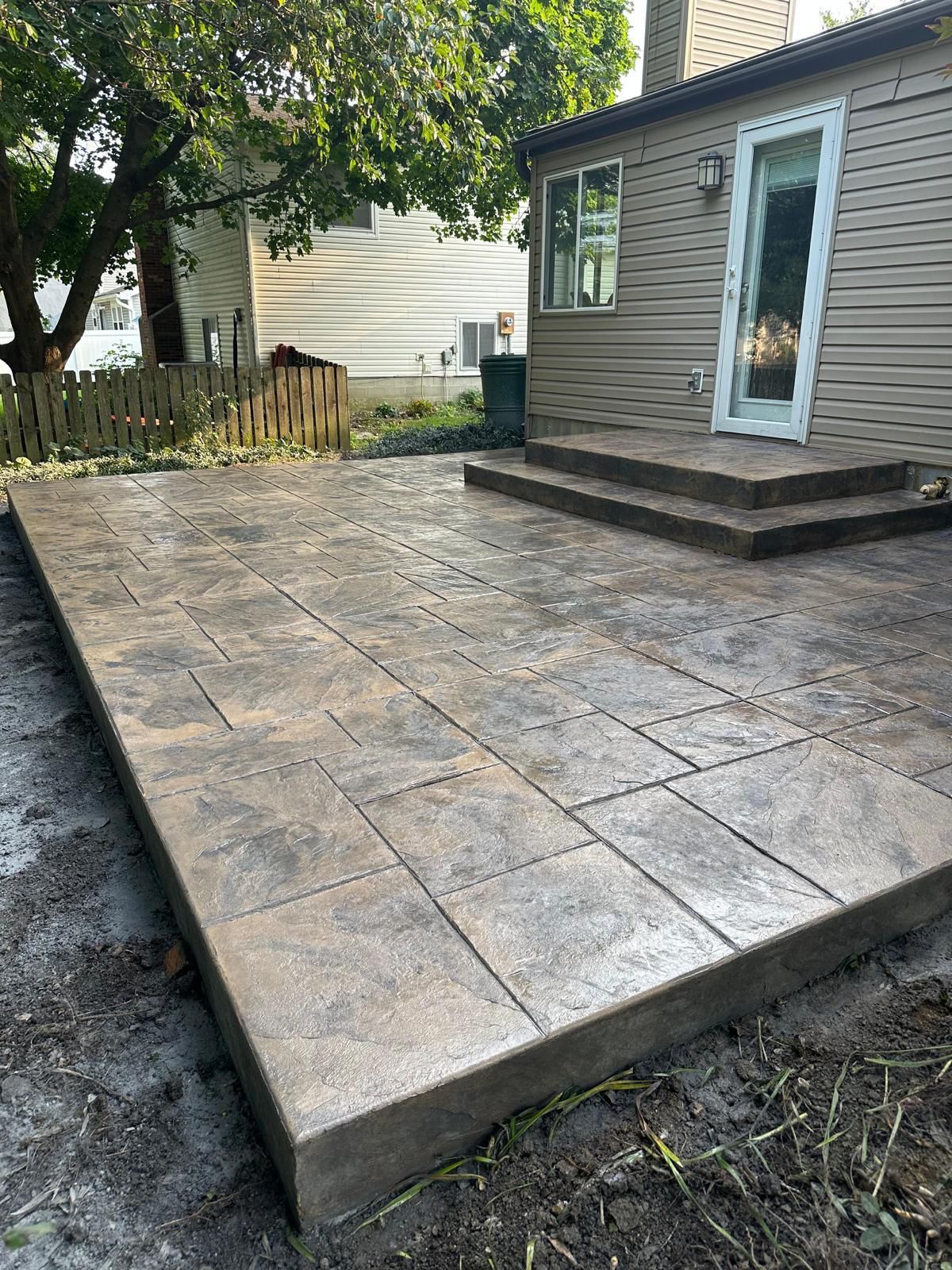
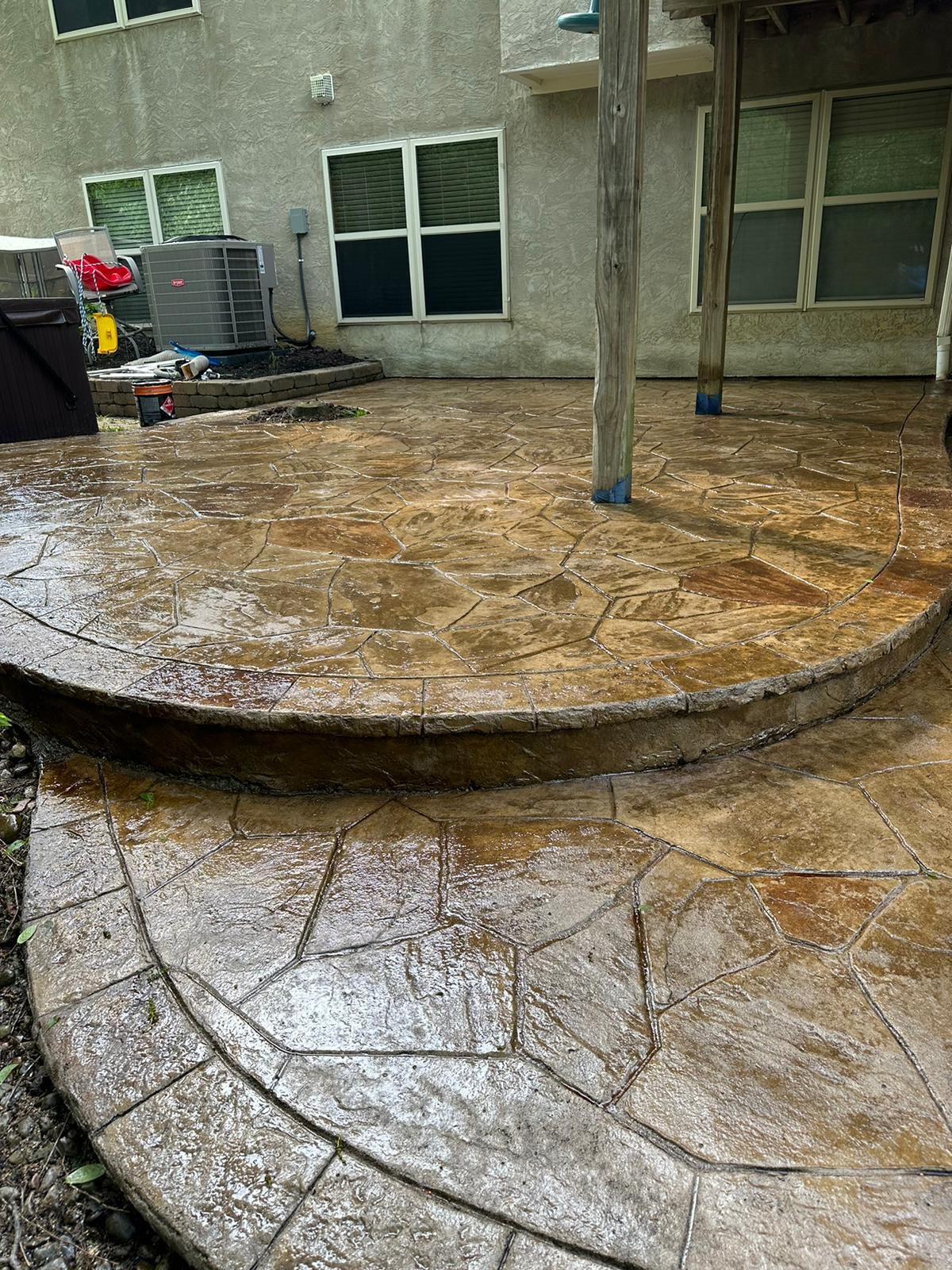
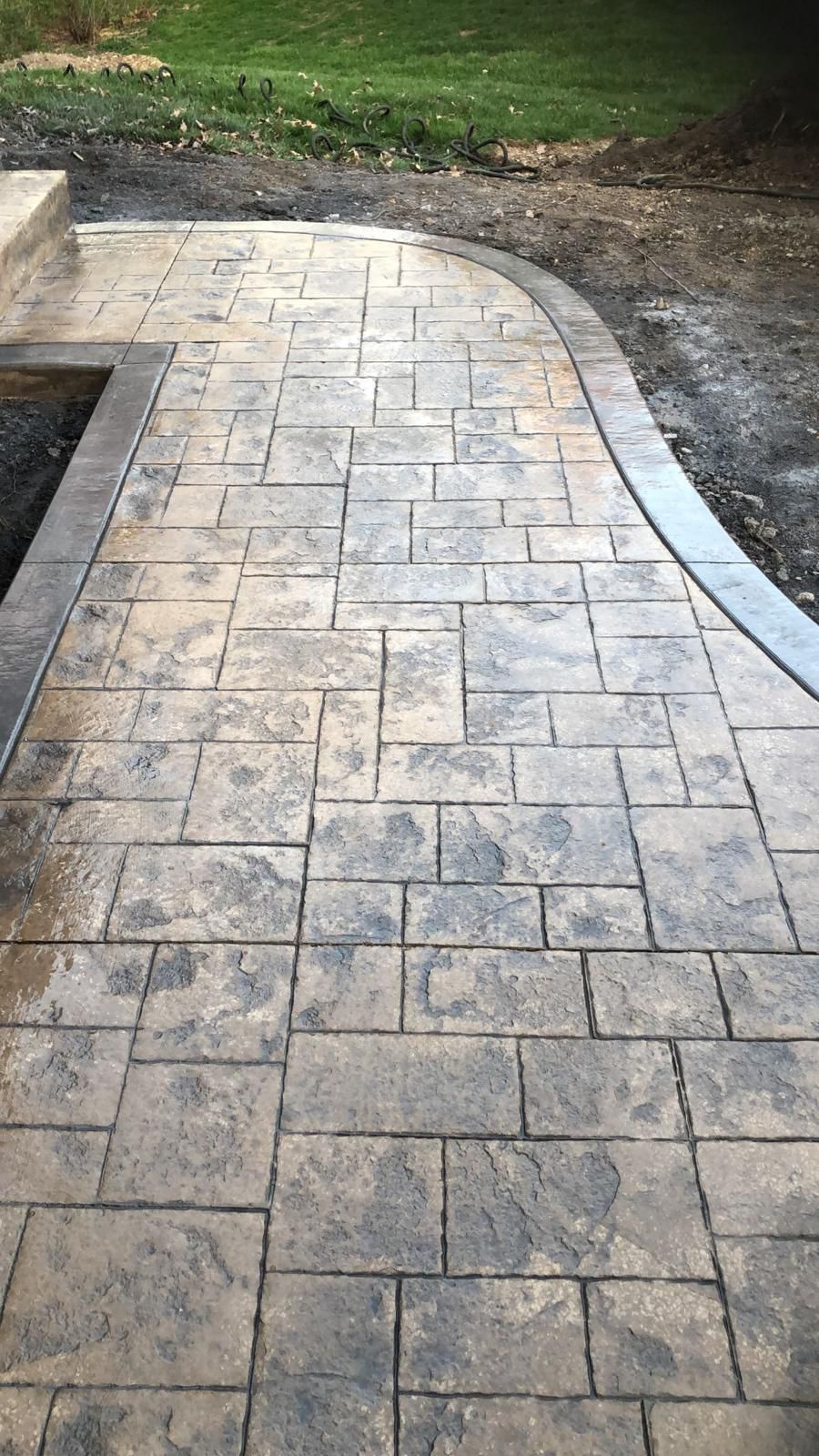
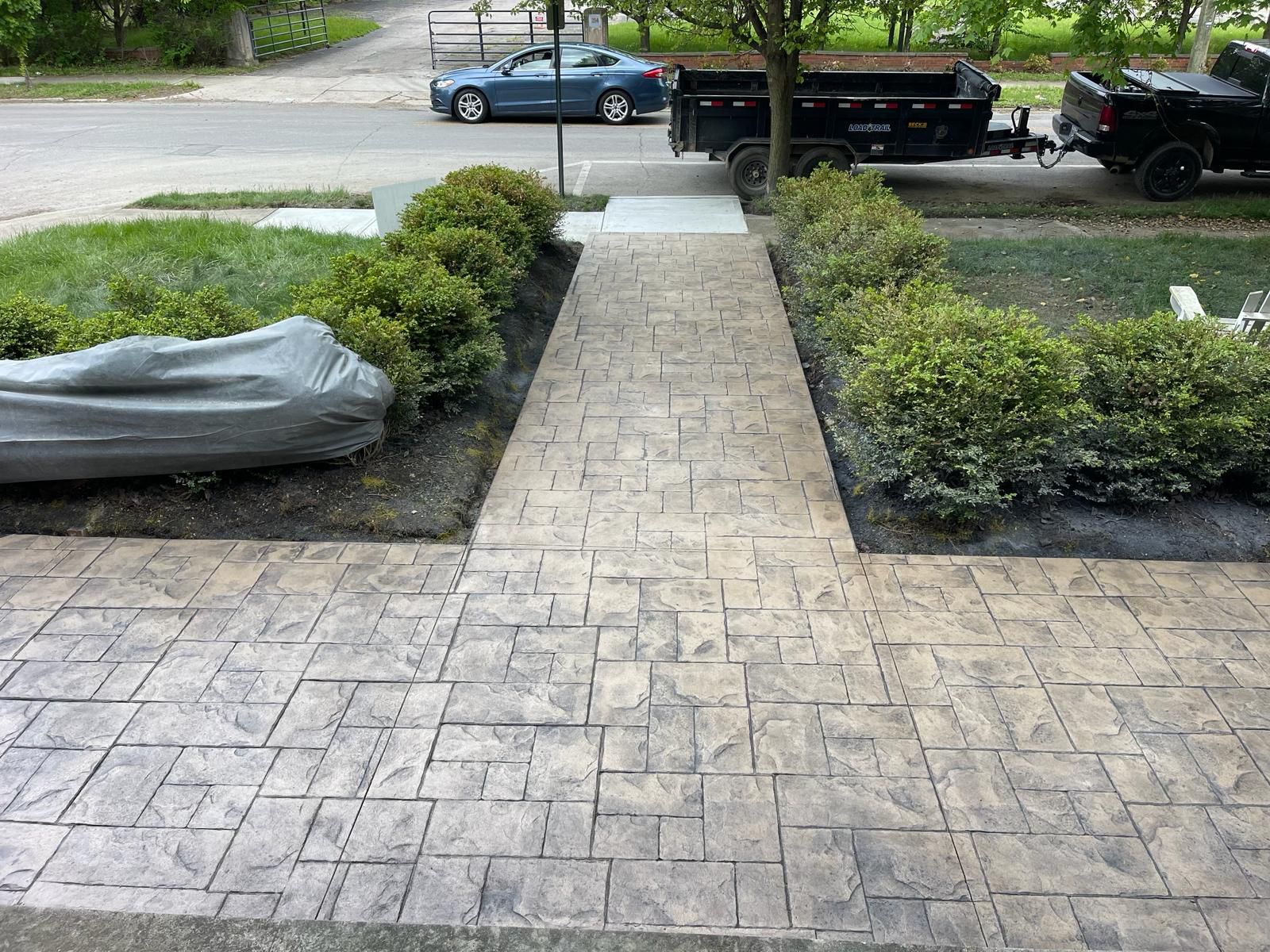
Large irregular stones with deep grout lines. The most old-world rustic look in our lineup. Pairs especially well with brick homes, mature landscaping, and side yards where you want the path to feel weathered and natural from day one.
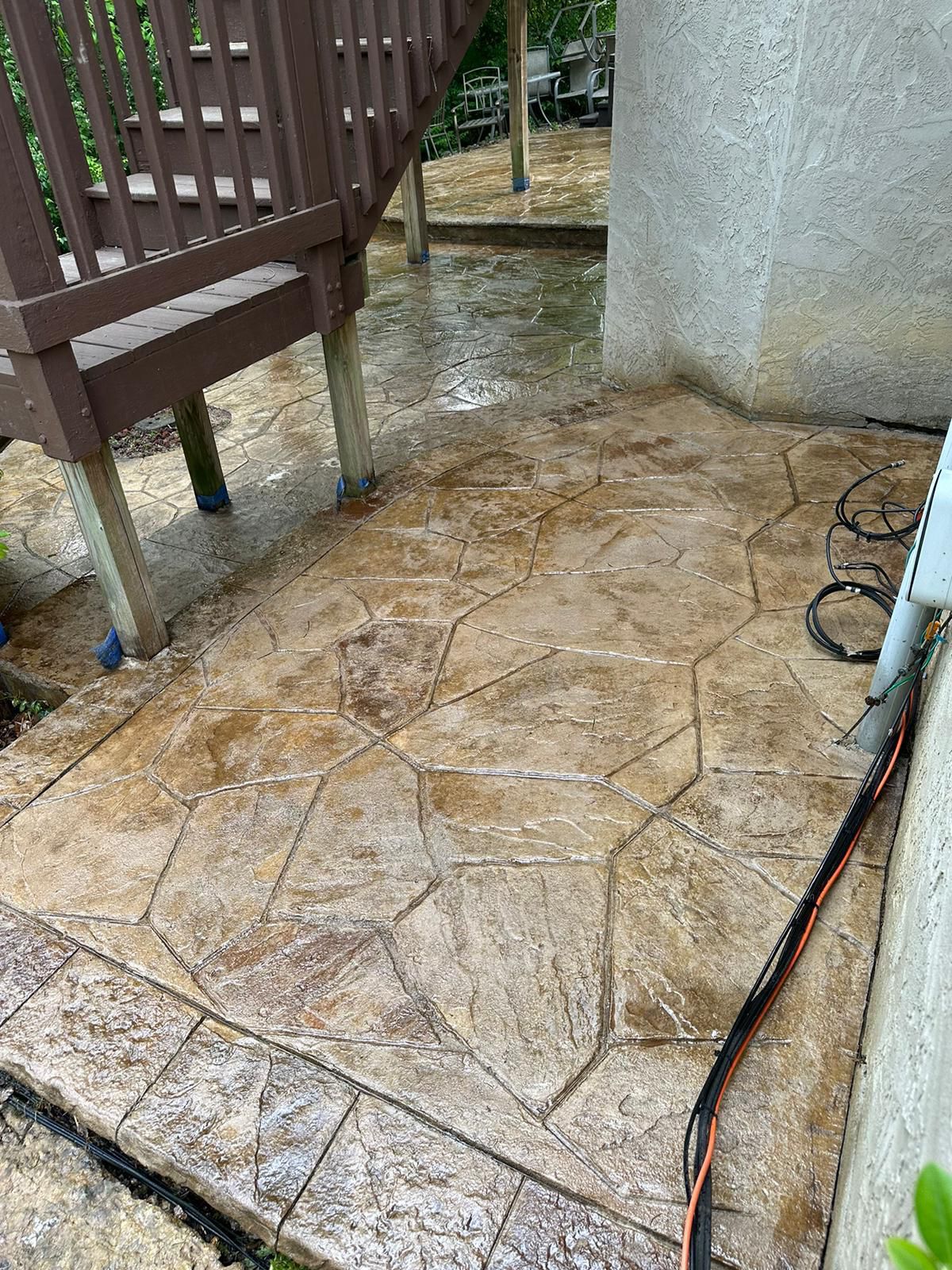
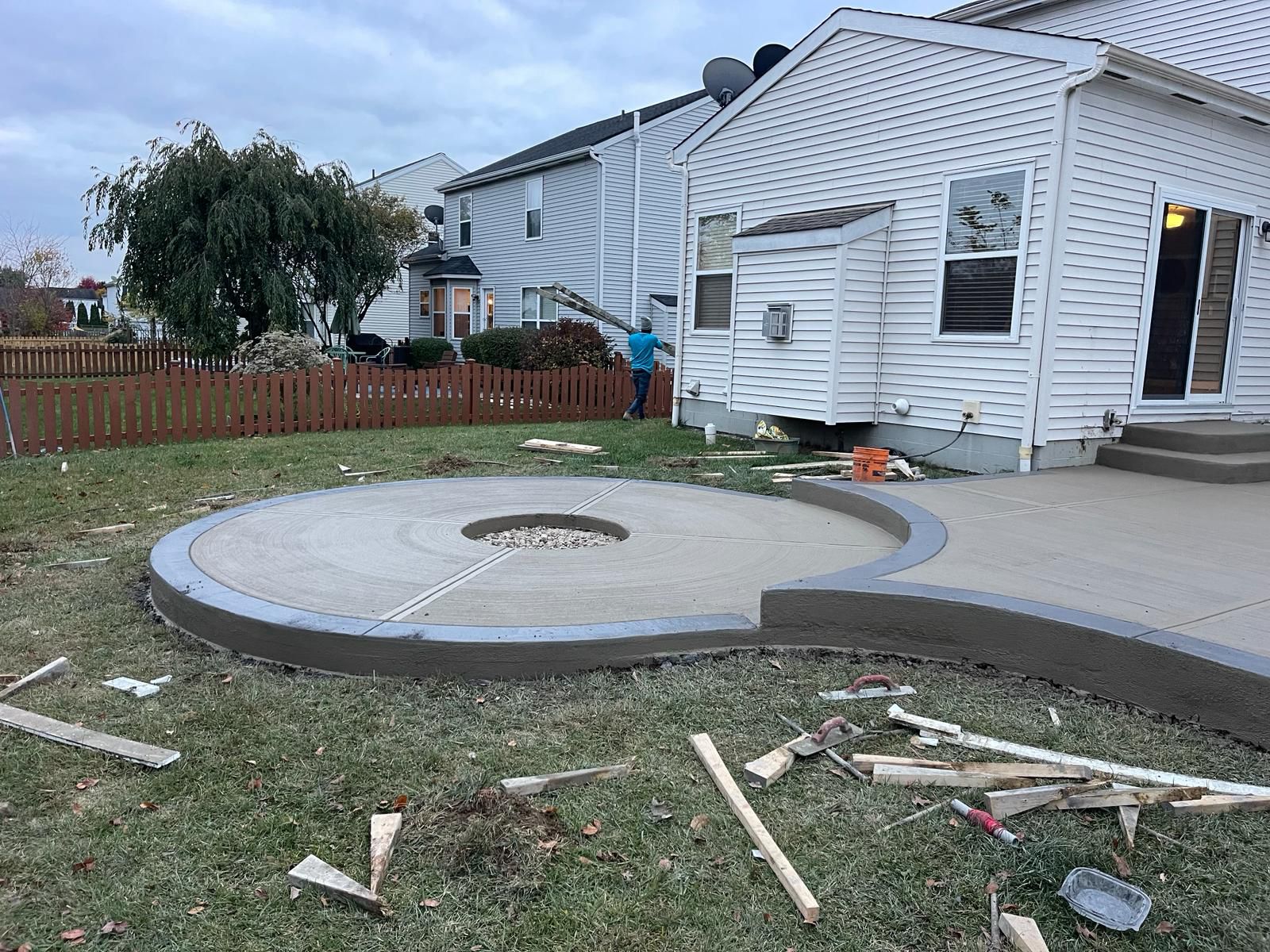
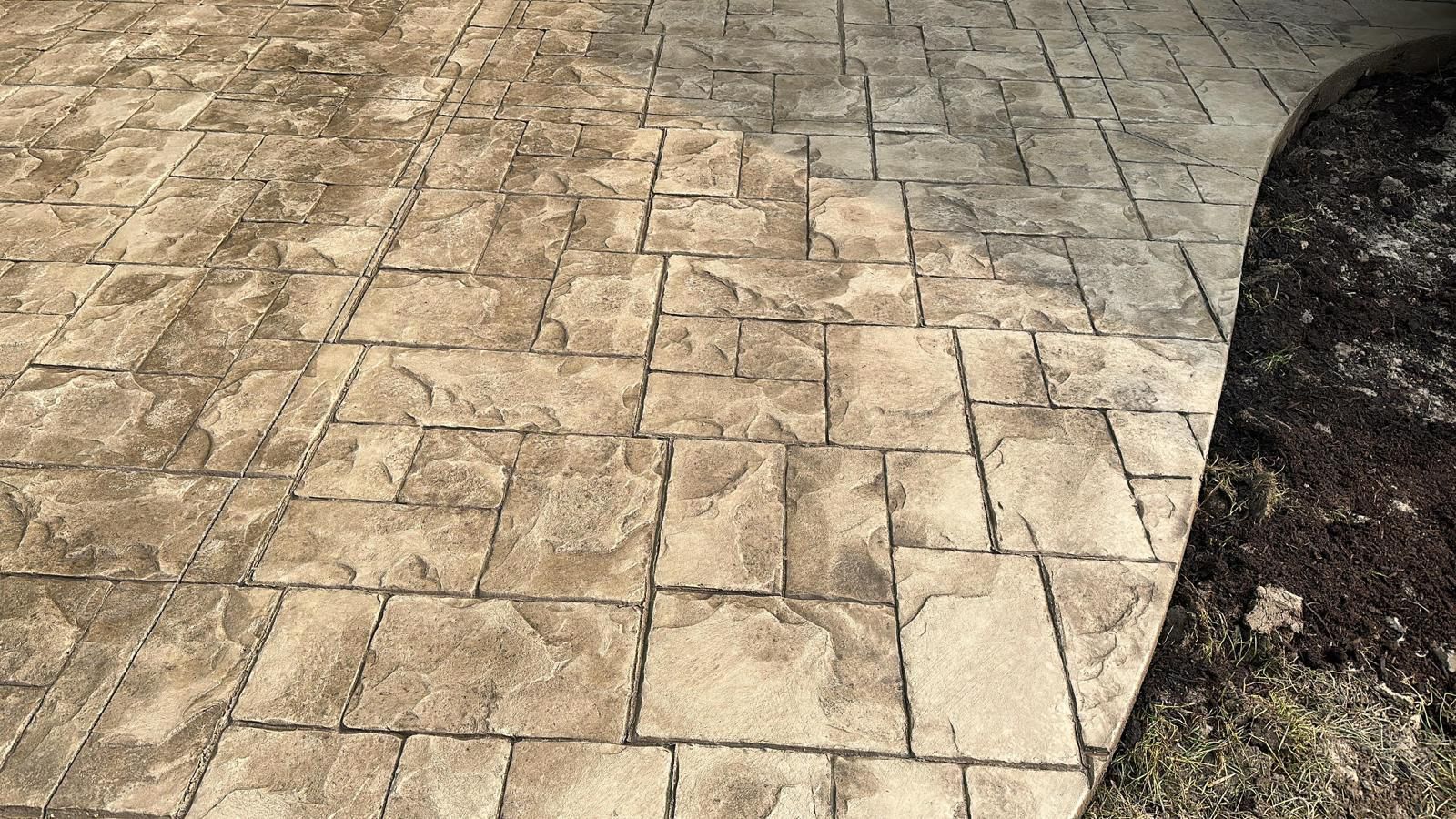
Stamped concrete gets its color two ways — an integral color mixed into the concrete itself, plus an antique release powder applied during stamping that settles into the texture for depth. We work with the full Davis Colors and Brickform palettes; below are a few of our most-requested combinations.
Most contractors won't put a number on their site. We will, because we'd rather you know upfront if the budget works:
Where you land in that range depends on pattern complexity, color count, slab prep required, and accessibility. A 400 sq ft backyard patio in a simple ashlar pattern runs around $5,000–$7,500. The same patio in a multi-color wood plank pattern runs $7,000–$9,000.
For reference, standard broom-finish concrete runs $6–$10/sqft, and pavers run $18–$30/sqft for comparable visual quality. Stamped sits between the two on price but lasts longer than pavers without the weed/shifting maintenance.
The questions we get on every estimate. If yours isn't here, just call — (513) 609-1626.
$12–$22 per square foot installed, depending on pattern complexity, number of colors, and prep required. A standard 400 sq ft single-color ashlar patio runs about $5,000–$7,500. Multi-color wood plank or flagstone designs run higher. We provide written fixed estimates — the price we quote is the price you pay.
25 to 30+ years when installed correctly and re-sealed every 2–3 years. The big variables in Ohio are sub-base prep (compacted gravel), the right concrete mix for freeze-thaw, control joints placed correctly, and a quality penetrating sealer. We don't cut corners on any of these — that's why our work still looks good 10 years in.
It can be, but it's manageable. Two things help: the stamped texture itself adds grip compared to a smooth slab, and we can mix a non-slip silica additive into the topcoat sealer for pool decks, walkways, and anywhere slip resistance is a concern. Wood plank pattern tends to be the most slip-prone; ashlar slate the least.
For most residential applications, yes. Pavers can be individually replaced if damaged, but they settle and shift over years — meaning weeds in the joints, uneven surfaces, and re-leveling every 5–7 years. Stamped concrete is one continuous slab, so no weeds, no shifting. It's also 30–50% cheaper installed for comparable visual quality. The trade-off: if a section cracks, you can't replace just one "stone."
For a typical residential patio (300–500 sq ft): 2–4 working days. Day 1 is excavation, sub-base, forming, and rebar. Day 2 is the pour, color, stamping, and detail work. Day 3 is curing (no work on site). Day 4 is sealing. Driveways usually take 3–5 days depending on size. We schedule pours around weather — no pouring in rain, freezing temps, or extreme heat.
Two things: clean it occasionally (hose, mild soap, soft brush — no acid washes or pressure-wash hammering), and re-seal every 2–3 years. Re-sealing is a 1-day job and most homeowners can DIY it for around $150–$300 in materials, or we can do it for you. Skipping the re-seal is the #1 reason stamped concrete fades or stains prematurely.
All concrete cracks eventually — that's why we cut control joints into the slab during stamping. Control joints are intentional "weak points" where any future cracks will form, hidden along the pattern lines so they're nearly invisible. Random surface cracks usually mean the sub-base wasn't compacted right or the joints weren't cut. Our work is sub-base prep first, pretty pattern second.
Yes, with a stamped overlay — a thinner application (3/8″–1/2″) applied directly on top of existing slab. It's cheaper than a full tear-out and works well if the existing concrete is in good shape (no major cracks, no heaving, no spalling). Overlays cost about 60–70% of a full installation. We'll tell you honestly if your slab is a candidate or if it needs replacement.
Free, no-pressure estimate. Most quotes go out within 24 hours of your call. Tell us what pattern you're considering and any photos of inspiration you have — we'll come measure and give you a fixed price.